By Novae Caelum · Originally published
Mostly that I’m addicted to making films!
This is going to be a long breakdown post! I just uploaded the film I made this week, The Throne of Eleven, to Youtube and Facebook. I’m uploading it here now as I’m typing this, so you can all watch it native here, too!
THE MOVIE WOOT:
This is an adaptation of my epic fantasy book The Throne of Eleven.
Last Saturday night I decided to set up this project I’d started over a month ago in my Fiction.show app to run autonomously overnight, and then kept running it mostly autonomously through Sunday to roll ~45-50 minutes of raw AI video footage.
And to be clear—I DID start this project over a month ago, so, it wasn’t entirely within the span of a week. But the lion’s share of the work was (we’d only rolled 4 minutes before), and it could have been done within that seven day span, easily.
I decided to start this project with Minimax H3, seeing what a budget frontier model could do, and trying to push my system. It did well-ish, but, I almost certainly won’t use this model for a long project again (for reasons I’ll go into!).
Some project specs:
All initial footage rolled in Fiction.show. 1/4 fixes in Fiction.show, 3/4 in Magnific (because we hit some bugs with reference uploads, which I’m now fixing! Plus, I need to do things the hard way sometimes so I can figure out how to do them automated.) Upscaling in Topaz online. A very few shots reframed in Higgsfield when all else failed, because they’ve got some extra editing sauce.
Total time spent by me: ~19 hours. This unfortunately kept bloating as we found more to fix.
Total cash into this: ~$600-650. I was saying $550, but I forgot to add in compute, and had some last-minute fixes we had to do!
A rough breakdown of this is: $300 assets + raw footage in GPT Image 2, 2.5 and Minimax H3 at 768p, $100 upscaling in Topaz Astra 2 to 1080p + $20 in upscale fixes, $130-180 fixes mostly in Wan 3.0, Seedance 2.0, and Seedance 2.5 (I’m calling this figure squishy because a lot of it was in Magnific credits, and that’s hard to solidly gauge). And $50-80 in compute to run the agent, across both Fable and Astra, with rolling and editing. I have $200 Max accounts in both Codex and Claude, so, calculating that roughly from there and my usage meters.
Every project is gonna be different, and your fix budget, compute allowances and needs, video budget, even difference per providers, etc, might end up different than mine with similar length books (this one was 16K to start, but, a very compact story so another 16K book might be totally different).
For instance—my fixes figure above was going by current generator rates, but really, I was rolling in a grandfathered Magnific account where credits are about half the rates they are now. So my actual fix cost was less, and we deal with these sorts of things all the time in the world of video AI. I rolled $500 worth of Seedance 2.5 when it came out in Runway’s $100 7 day unlimited plan. And API providers often have sales, too.
My Minimax here was true to cost! But even that can be nebulous—I was using Minimax direct from their own API (that is in my app), whereas if I would have used Fal.ai, say, it would have been twice the price.
So if you’re trying to calculate, look at this figure and + a few more hundred to find your ceiling with all the variables, look for the best API prices for what you’re after (Kie.ai and Atlas Cloud usually have the lowest), then be happy if it’s a lot less! I think we’ll dial in tighter budget calculations as we go.
If you’re just learning, you probably want to factor in a bit more, too, because you’ll be making more mistakes the first go rounds that will tighten up as you do more, costing less.
And, model error, like here, especially if you’re making a go at a model we don’t use as much (please start with Seedance 2.5 or at very least 2.0!).
This film would have been notably less if there hadn’t been so many fixes, but, the fixes took up a looot. (And a lot of time. And a lot of headaches.)
What WASN’T a headache though was just how quickly Astra could move to help me rip through an entire timeline, pull out clips to fix or upscale (or upscale fix) and then put them back in again. That saved, easily, 50+ hours on this project. Because I’ve done that by hand before. And time is money, too.
Most of the fixes were very short clips and cheap; some were long and expensive, even in Wan.
Things broke a little at the last minute when the upscales came in, too, because I’d initially checked the upscaled closeups and they were sexy and fine—but Minimax does squishy details in the background, and that ended up making eighty-six shots unusable for the upscaled versions, gah, so this morning I had Astra rip through the timeline again, pull those out, and we reran those in bulk Starlight 2.6 precise which won’t accidentally add, say, a random mustache mid-sentence or a random bowler hat (true story). Because we tight-pinpointed exactly those shots, even ones 1-2 seconds, stitching them together for the re-upscaling, we saved a ton vs re-upscaling everything (don’t do that).
And a few of those were bad at the generation level, so we sighed and yeeted those into Seedance 2.5 and came out with goodness.
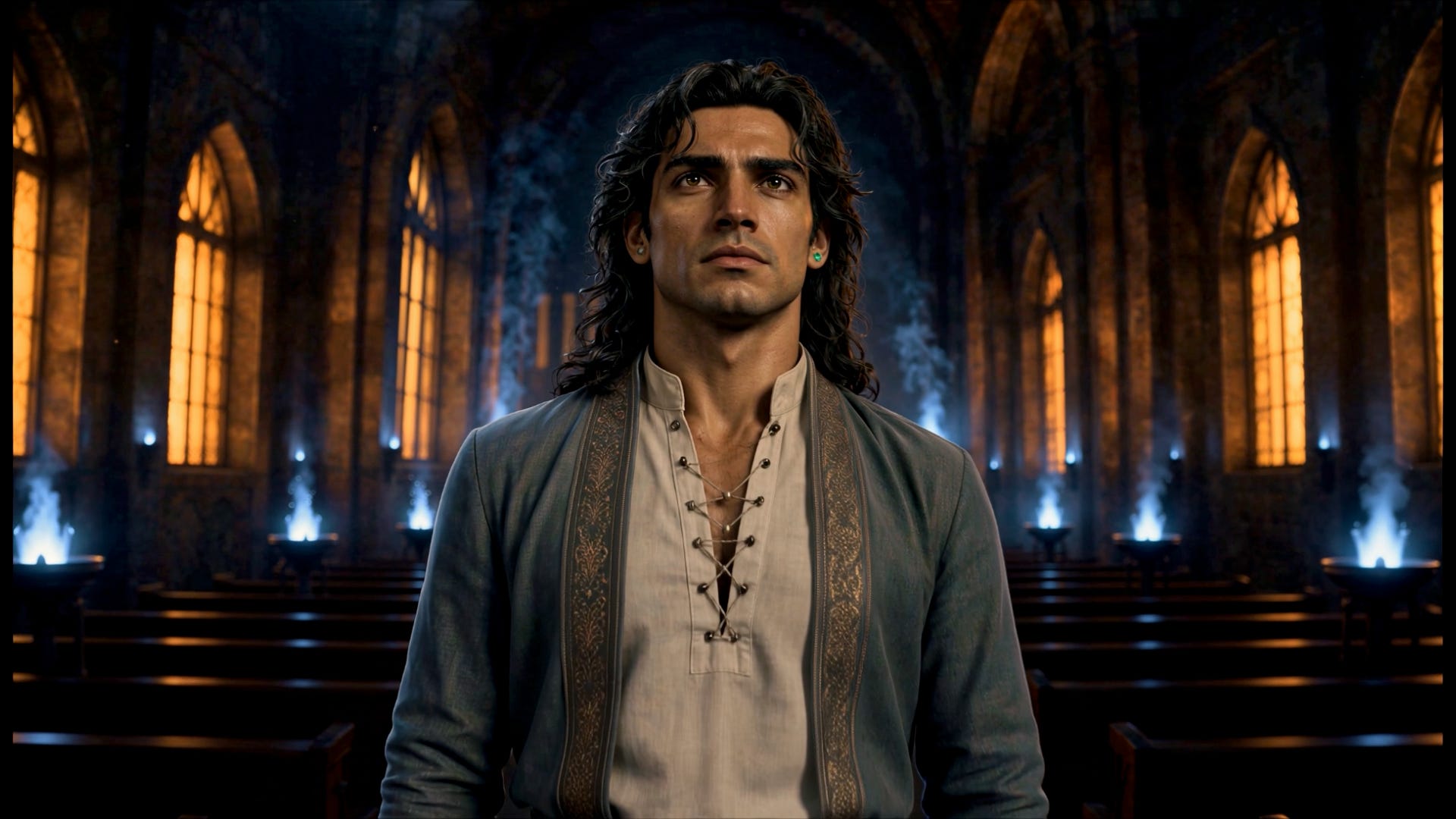
Minimax did have some moments of brilliance—it handled some emotions really well, and did some nice effects with light in some scenes, but, not in a way that I think would have been better than just rolling in Seedance.
One plus was we didn’t have to deal with that annoying Seedance 2.5 background drone music you can’t all the way get rid of, BUT, the dialogue also came out more tinny here, too.
SO.
My overall verdict on running a budget model at scale: if you want speed (and ease) I’d skip it and go straight to Seedance 2.5! (Or whatever is the top model of the day, because looks like we might have some big guns coming up in another month or so, too!)
If I hadn’t rolled the footage in Minimax H3 but in Seedance 2.5 at 480p and upscaled, I’d wager I’d have come up around similar costs but without as much fixing. Or maybe even less. And better overall acting and motion results. So better results + faster time = better win overall.
But! I had to do the science!
And I AM glad I did the science, because 1) I have a kickass WHOLE MOVIE that I love and 2) now I know what not to do so I can focus hard on what to do!
Some more things and process notes we learned along the way: